
Laser welding is one of the most precise joining processes in modern metalworking. A focused laser beam delivers the required energy locally into the joining zone and creates a metallurgical bond in a very short time. Compared with many conventional welding processes, this makes it possible to achieve high welding speeds, narrow heat-affected zones and low thermal distortion. It also Fraunhofer Institute for Laser Technology ILT describes laser welding as a process for precise weld seams and high processing speeds.
For industrial production, however, the real advantage lies not only in the weld seam. Laser welding becomes particularly economical when cutting, bending, positioning and tooling are already aligned with the later welding process. That is precisely why the process should be regarded as part of a continuous process chain – from precise laser cutting to an assembly-ready component.

How does laser welding work?
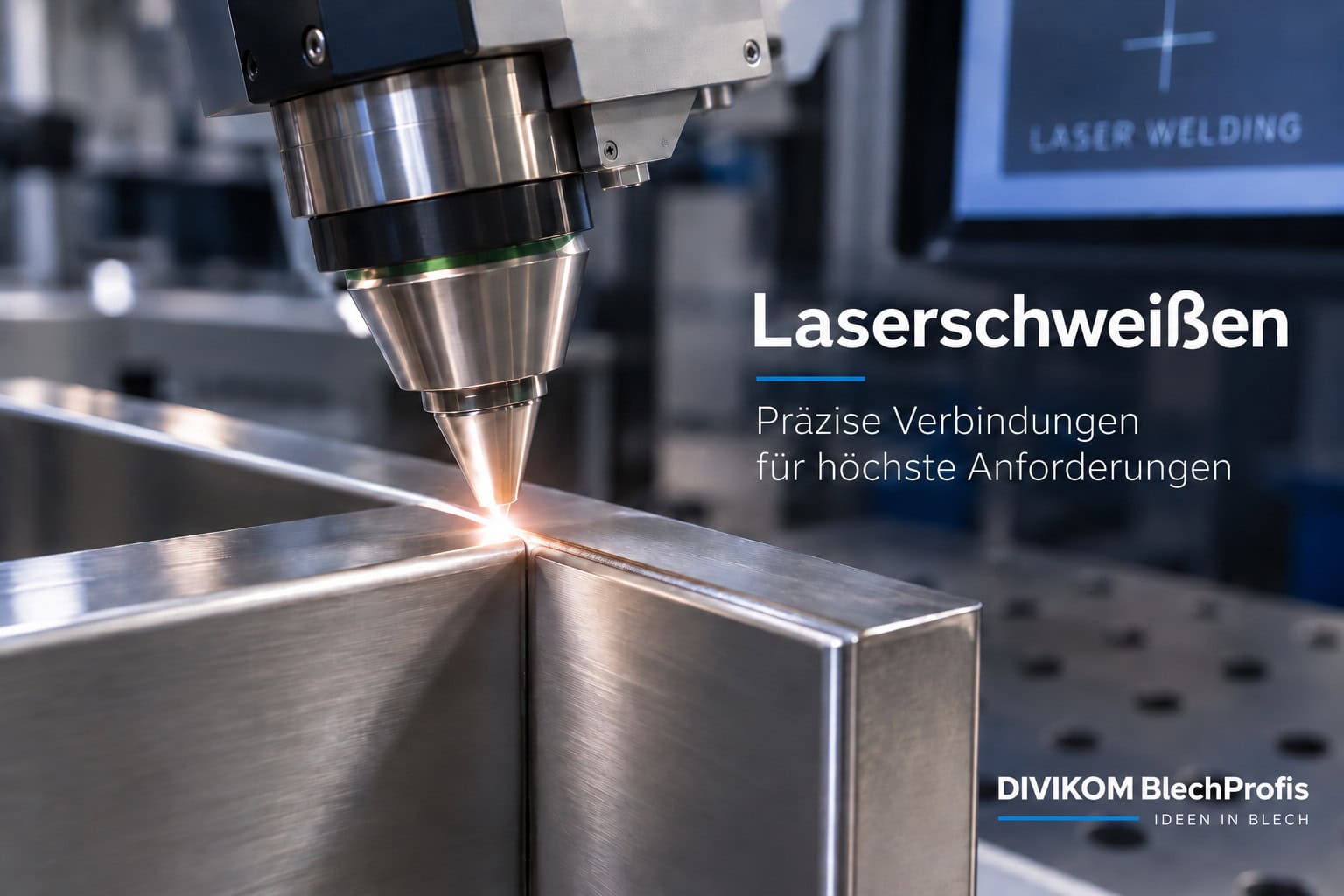
In laser welding, the energy of a highly focused laser beam is concentrated on a very small area of the workpiece. The material melts locally and forms the weld joint as it solidifies.
Depending on energy density, material and process parameters, a distinction is made in particular between heat conduction welding and keyhole welding.
At the Heat conduction welding the surface is melted without forming a deep vapour capillary. The resulting seams are comparatively wide and shallow and may be of interest, for example, for thin components or visible seams.
At the Deep welding the energy density is significantly higher. Part of the material evaporates, creating a vapour-filled capillary in the molten pool – the so-called Keyhole –. This enables the laser energy to penetrate deeply into the material. This produces narrow seams with a large welding depth and a high ratio of seam depth to seam width.
Especially for industrial series components, this can make it possible to produce joints at high speed and with low heat input.
Why component preparation determines welding quality
The laser’s high precision is also one of its greatest manufacturing requirements.
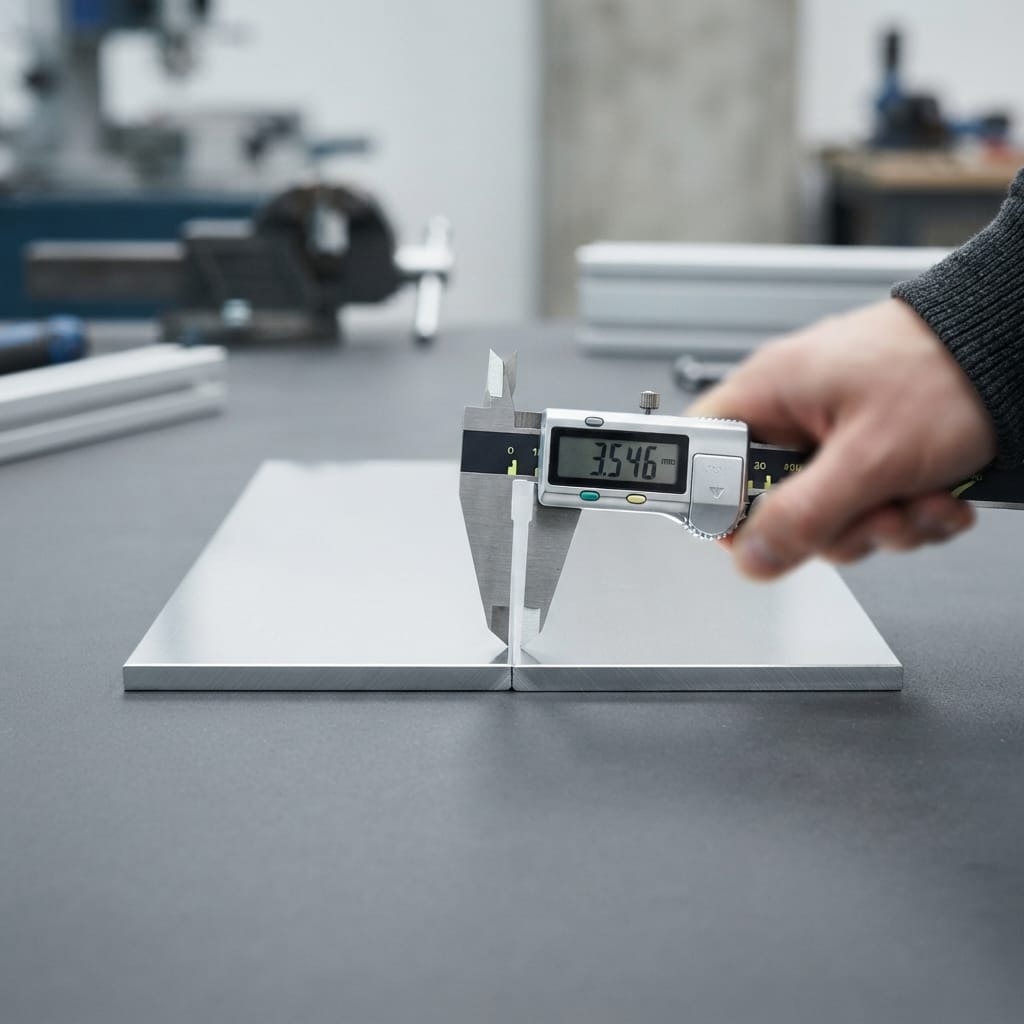
While a conventional welding process can partially compensate for certain gap or positioning deviations, laser welding in many applications requires highly reproducible component geometries and defined gap dimensions.
That is why a good laser welding joint starts with the cut part.
Precisely manufactured parts from the Laser cutting can be designed straight away so that they can then be positioned accurately, bent and placed in a welding fixture.
Design details also play an important role. Interlocking joints, tabs, centring features or self-locating geometries can reduce fixture requirements while improving the repeatability of the welding position.
The same approach can be used for tubes and profiles. Through precise Tube lasering contours, cut-outs and positioning aids can be integrated directly into the components. This allows the components to fit together precisely before welding.
For the purchaser, this means: It is not only the single welding minute that determines the costs. What matters is how efficiently the entire assembly can be designed and manufactured, from raw material to finished component.
Advantages of laser welding in industrial manufacturing
When properly designed, the process offers several economically relevant advantages.
High welding speed
The high energy density means that many joints can be produced at significantly higher travel speeds than with conventional welding processes.
For suitable components and seam geometries, deep weld joints are sometimes possible in a single pass.
Low heat input
The energy is introduced locally and for a short time. This keeps the heat-affected zone comparatively narrow.
This can significantly reduce thermal distortion.
Less reworking
Lower distortion means less effort for straightening the components in suitable applications.
Clean, narrow laser weld seams can also reduce the required grinding and finishing effort.
However, whether reworking can be eliminated entirely depends on the component, seam requirements, visible surface and desired surface quality.
Good automation capability
Laser welding processes can be integrated very well into automated production cells.
Robots, CNC axes or scanner optics can move the laser precisely along the programmed weld seam. Sensors and process monitoring systems also make it possible to monitor key process variables.
This is particularly interesting for series production and recurring assemblies.
Which materials can be laser welded?
The range of applications is broad.
Typical materials are:
- unalloyed and alloyed steels,
- stainless steels,
- nickel and titanium alloys,
- aluminium and aluminium alloys,
- copper and certain copper materials.
However, actual weldability always depends on material composition, material thickness, surface condition, component geometry and process control.
Aluminium
Aluminium places particular demands on process control due to its high thermal conductivity and oxide layer. Nevertheless, modern laser sources and adapted process parameters enable very productive applications, including in vehicle construction, electromobility and energy technology.
Copper
Copper reflects a large proportion of certain laser wavelengths and also has high thermal conductivity.
Depending on the task, adapted beam sources, wavelengths, beam shaping and process strategies may therefore be required. These processes are developing dynamically, especially for electrical and electronic applications.
Different materials
Joining different materials is also possible in principle, but requires a precise technological assessment.
For example, brittle intermetallic phases can form when steel and aluminium are joined directly. The material combination, seam geometry and heat input must therefore be specifically matched to the application.
Process parameters: Why „laser power“ alone says little
The quality of a laser weld does not depend on a single machine parameter.
What is crucial is the interaction of, among other things:
- Laser power,
- Focus position,
- Beam diameter and beam profile,
- Welding speed,
- Material,
- Material thickness,
- Gap width,
- Surface condition,
- Shielding gas,
- Component positioning and
- clamping technology.
A high-power laser therefore does not guarantee a high-quality welded joint.
Especially with industrial components, the entire process window must be controlled reliably and stably . This also includes reproducible pre-processes and suitable quality control.
Quality in laser welding: ISO 13919-1 and ISO 13919-2
For industrial clients, the statement „the weld looks good“ is often not enough. Especially in regulated or quality-critical areas, requirements must be clearly defined and documented.
An important basis is provided by the standards ISO 13919-1 and ISO 13919-2.
ISO 13919-1:2019
The ISO 13919-1:2019 covers quality levels for imperfections in electron beam and laser beam welded joints made from steel, nickel, titanium and their alloys.
The standard distinguishes between different quality levels. Quality level B sets the highest requirements for the finished weld seam.
However, the quality level actually required should not be specified as a blanket rule. It is determined by the application, the design and the requirements agreed between the client and the manufacturer.
It is also important to note: the quality level describes manufacturing quality in terms of permissible imperfections. It is not automatically evidence that a component is suitable for every intended use.
ISO 13919-2:2021
For aluminium, magnesium and their alloys, as well as oxygen-free copper the ISO 13919-2:2021 is relevant.
Here too, requirements or recommendations for quality levels of imperfections in laser beam and electron beam welded joints are described.
The standards therefore create a common technical language between design, purchasing, production and quality assurance.
Qualification of the welding procedure according to DIN EN ISO 15614-11
For particularly demanding applications, formal qualification of the welding procedure used may also be required.
For electron beam and laser beam welding procedures, DIN EN ISO 15614-11:2026-04 relevant. It is based on ISO 15614-11:2025 and covers welding procedure testing for electron beam and laser beam welding. Information on the current edition is available via the DIN standard search available.
This makes an important distinction clear:
ISO 13919 describes quality levels, or permissible irregularities, of the weld joint. DIN EN ISO 15614-11, by contrast, concerns the qualification of the welding procedure.
For an industrial order, it should therefore be clarified already in the enquiry which standards, tests, documentation and quality levels are actually required.
Process monitoring and quality assurance
In automated manufacturing processes, monitoring the welding process is becoming increasingly important.
Depending on the component and quality requirements, the following may be used:
- seam tracking,
- optical process monitoring,
- camera systems,
- sensor technology for monitoring the weld pool,
- power and process data acquisition,
- acoustic analysis,
- non-destructive testing methods as well as
- destructive testing on sample or qualification components.
Digital process data can help to identify deviations at an early stage and document manufacturing processes more transparently.
However, they replace neither proper process design nor the required component inspection.
Safety in laser welding: OStrV and TROS Laser Radiation
High-performance laser systems place particular demands on occupational safety.
Laser radiation can severely damage the eyes and skin in a very short time. During welding, additional hazards can also arise, for example from reflected radiation, incoherent optical secondary radiation, fumes, particles and fire or explosion risks.
In Germany, the Ordinance on Artificial Optical Radiation – OStrV forms the statutory framework. Among other things, it requires a risk assessment as well as suitable technical, organisational and, where applicable, personal protective measures.
The TROS Laser Radiation provided by the Federal Institute for Occupational Safety and Health specifies the requirements for practical workplace use.
These include, for example, the assessment of laser exposure, shielding and interlocks, demarcated laser areas, organisational protective measures, suitable personal protective equipment and instruction of employees.
With high-power laser equipment, laser welding is therefore not only a matter of precision and productivity, but always also of controlled plant engineering and professional laser protection.
Laser hybrid welding: when larger gaps need to be bridged
An interesting further development is laser-arc hybrid welding.
Here, the properties of a laser beam are combined with an arc welding process.
The laser enables concentrated energy input and deep penetration depths. At the same time, the arc can improve gap bridging and provide additional filler metal.
Such hybrid processes can be particularly interesting for larger components, thicker materials or applications where pure laser welding reaches its limits due to component tolerances.
Cost-effectiveness: when does laser welding pay off?
Laser welding is not automatically the most economical solution for every component.
A sound assessment takes the entire production chain into account:
Cutting → Forming → Positioning → Welding → Inspection → Reworking → Surface treatment → Assembly
For suitable components, savings arise not only from a higher welding speed.
Economic advantages can also arise from:
- less component distortion,
- less straightening,
- less grinding,
- shorter cycle times,
- good automation capability,
- high repeat accuracy,
- less reworking and
- a design-optimised assembly.
This is offset by investment, jig, programming, inspection and qualification costs.
A blanket payback period is therefore not useful. The decisive factors are quantity, component geometry, material, quality requirements and the design of the entire process chain.
Laser welding as part of end-to-end sheet metal fabrication
This is precisely where industrial buyers often underestimate the potential for optimisation.
If laser cutting, bending, tube processing and welding are planned independently of one another, unnecessary tolerance chains and additional jigging or reworking effort arise.
If, on the other hand, the design is matched to the later manufacturing process at an early stage, assemblies can be produced much more efficiently.
A typical process can, for example, look like this:
Laser cutting → Bending → Positioning → Laser welding → Surface finishing → Marking → Assembly
For tube and profile constructions, this can Tube lasering already create positioning contours or plug-in connections.
For the permanent marking of components, a laser marking or laser engraving can then be integrated into the digital manufacturing workflow.
For DIVIKOM BlechProfis, the focus is therefore not just on the individual technology. What matters is, which combination of manufacturing processes is technically and economically sensible for the specific component.
Frequently asked questions about laser welding
What advantages does laser welding offer compared with conventional welding processes?
Typical advantages include high welding speed, low and localized heat input, narrow heat-affected zones, minimal component distortion, and excellent suitability for automation.
How strongly these advantages actually come into play depends on the material, design, seam geometry and process parameters.
Which metals can be laser welded?
Laser beam welding is used, among other things, for steel, stainless steel, aluminium, nickel and titanium alloys, as well as copper.
However, not every material or combination of materials can be processed with the same parameters. Weldability must be assessed for the specific application.
What role does the gap size play?
A very large one.
The focused laser beam creates a relatively narrow process zone. That is why reproducible component geometries, precise cuts and reliable positioning are particularly important.
What does quality level B according to ISO 13919-1 mean?
Quality level B sets the highest requirements within ISO 13919-1 for the permissible irregularities of the finished laser or electron beam weld seam.
Whether this stage is required for a component must, however, be determined according to the application and the design requirements.
Which standard applies to aluminium and copper?
For laser- and electron beam welded joints made of aluminium, magnesium and their alloys, as well as pure copper, ISO 13919-2 is relevant.
Which standard is relevant for a welding procedure test?
For the qualification of electron beam and laser beam welding procedures, DIN EN ISO 15614-11 is relevant.
Is laser welding safe?
With properly designed systems and protective measures, laser welding can be used safely in industrial applications. However, high-power lasers pose significant risks to the eyes and skin and require systematic laser safety measures.
In Germany, OStrV and TROS Laser Radiation in particular must be taken into account.
Can laser welding completely eliminate rework?
In suitable applications, the effort required for straightening and grinding can be significantly reduced. However, whether reworking can be eliminated entirely depends on component geometry, visual requirements, tolerances and the required surface quality.
Conclusion: Precision is created throughout the entire process chain
Laser welding combines high speed with precise and locally limited energy input. The process can reduce distortion, speed up automated manufacturing workflows and significantly reduce the effort required for downstream processing steps.
Its greatest advantages, however, do not come from the laser alone.
Only when design, laser cutting, edging, component positioning, clamping technology, welding parameters and quality assurance are viewed as a connected process, can the economic potential be fully utilised.
Standards such as ISO 13919-1 and ISO 13919-2 create clear quality criteria. DIN EN ISO 15614-11 provides a framework for qualifying laser beam welding processes, while OStrV and TROS Laser Radiation specify the requirements for safe plant operation.
For industrial clients, this means: an economical laser welding solution does not begin at the welding plant, but already with the design and planning of the entire assembly.
Are you planning welded sheet metal parts, housings, frames or complete assemblies?
DIVIKOM BlechProfis supports you in selecting a suitable manufacturing solution – from precise cutting and bending through welding to the finished machined assembly.
 German
 English