
It depends on the specific requirements of your design which material ultimately represents the best choice. Uncoated steel offers high strength but requires corrosion protection, while stainless steel is naturally protected against rust due to its chromium alloy, and aluminum scores points in lightweight construction with its low weight. For a well-informed decision, engineers and planners must compare various factors such as mechanical properties, corrosion resistance, the preferred manufacturing process, and the resulting lifecycle costs together.
The selection of the right material forms the foundation for durable and economical constructions in modern manufacturing. In industrial practice, designers face the constant challenge of precisely selecting metals to combine mechanical stability with economic aspects. Both classic methods and technological advancements play a significant role in this. Practical manufacturing experience shows that precise alignment with the later operating conditions prevents premature wear and increases operational safety. Whether it is about building vehicles, architectural facades, or apparatus construction, the material properties significantly determine how the metal behaves during subsequent sheet metal processing.
Fundamentals and mechanical properties of steel
Steel, as a group of materials, covers an enormous range of strengths and specific material properties that can vary greatly depending on chemical composition and heat treatment. Steel properties. Uncoated carbon steel has excellent mechanical characteristics and can be easily formed, but tends to corrode in humid environments. To counteract this, processors rely on protective measures such as galvanizing or painting. Galvanized steel uses a zinc layer as an effective sacrificial anode protection, making it suitable for applications in construction, vehicle manufacturing, as well as for tanks and fences. Steel production.
In industrial manufacturing, the material usually undergoes various process steps before it takes its final form. Modern processes such as laser cutting or punching enable highly developed cuts with minimal tolerances. When complex geometries are required, targeted bending supports precise further processing. For detailed comparisons of cutting methods, it is worthwhile to take a look at modern methods, as discussed in a professional sheet metal cutting: laser cutting versus manual cutting – BlechProfis The combination of high tensile strength and good machinability makes unalloyed and low-alloyed steel an indispensable standard material for load-bearing structures.
Stainless steel as a resilient family of materials
Stainless steel, contrary to a widespread misconception, is not a single pure substance but a comprehensive family of alloys. The key characteristic is a minimum content of 10.5% chromium, which immediately forms a passive, self-healing protective layer in the air. Introduction to stainless steel. Despite this integrated protection, stainless steel is not absolutely corrosion-free but is susceptible to pitting or crevice corrosion under certain conditions, particularly in the presence of chloride ions. Corrosion properties.
Among the most well-known representatives is the austenitic stainless steel AISI 304, which is characterized by excellent ductility, good weldability, and easy formability. Stainless steel categories. For more demanding environments, such as in offshore applications or in chloride-laden industrial plants, molybdenum-containing grades or duplex stainless steels are used. In industrial processing, stainless steel often requires specific tools due to its hardening during forming. In addition to mechanical separation, precise surface treatment is gaining importance to fully restore the passive layer after welding or CNC milling.
Aluminum in focus: lightweight construction and thermal advantages
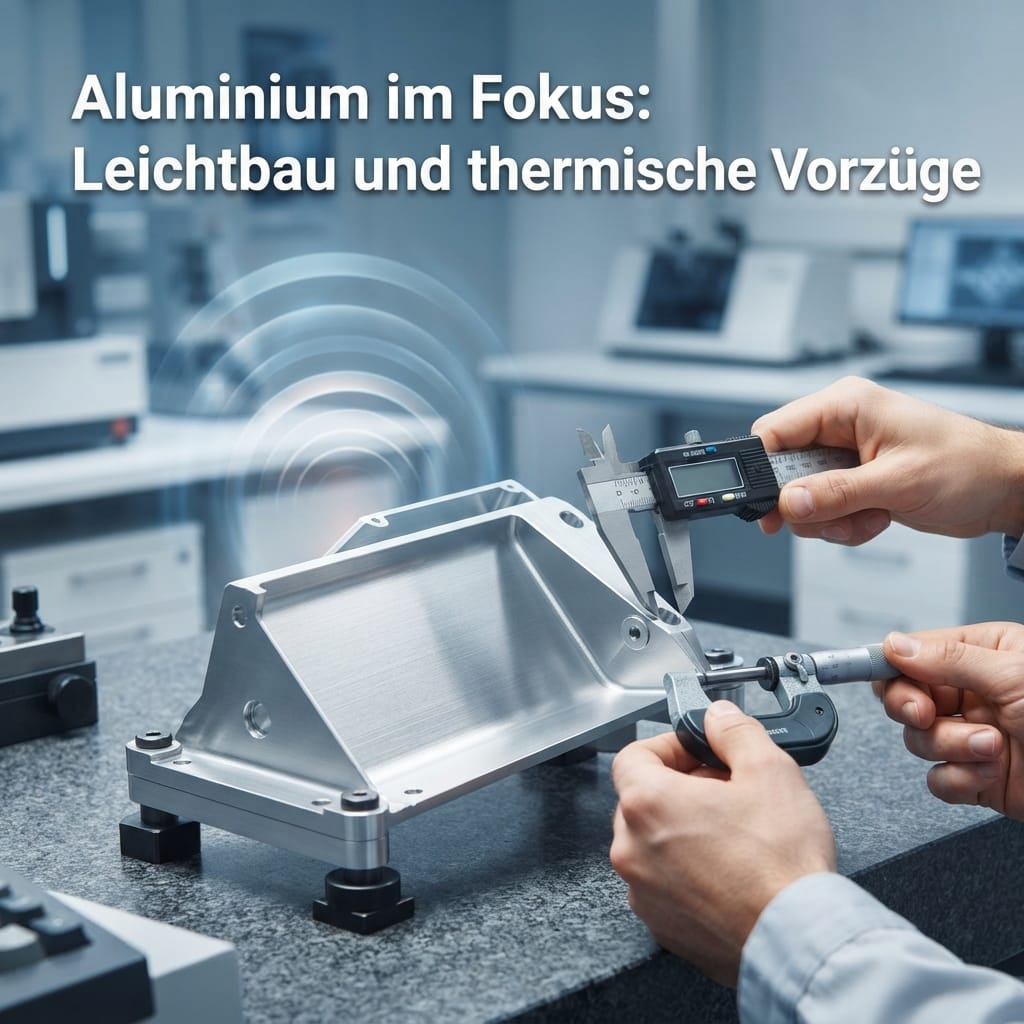
Aluminum differs significantly from iron materials due to its significantly lower density of around 2.68 to 2.90 grams per cubic centimeter, making it a preferred material for modern lightweight construction. Lightweight metals. In addition to its low weight, aluminum is characterized by high thermal conductivity, which in the 6000 series reaches values between 130 and 226 watts per meter and Kelvin. This predisposes the material for applications in thermal engineering and transportation, where thermal management determines efficiency.
The corrosion resistance of aluminum is based on an extremely thin but firmly adhering oxide layer that regenerates immediately in the air when damaged. Alloying elements such as magnesium, silicon, or manganese specifically influence the mechanical parameters, which is why blanket statements about low strength of aluminum are inaccurate. Depending on the temper condition, aluminum alloys achieve considerable tensile strengths. For industrial practice, this means that aluminum sheets must be precisely matched to the static loads to minimize deflections. Modern companies rely on specialized sheet processing methods to form the material without cracking.
Criteria for precise material selection
The decision for steel, stainless steel, or aluminum requires a systematic evaluation of all technical and economic parameters. Mechanical loads are the top priority, followed by the environmental conditions at the later place of use. While uncoated steel is usually the most economical option in indoor environments without aggressive media, damp or chemically active environments require the passive protective mechanisms of stainless steel. If the component is to have minimal weight, there is hardly any alternative to aluminum.
Another crucial aspect concerns the manufacturing costs and the availability of suitable semi-finished products. Not every sheet can be processed with the same machine as efficiently. Companies that process high-quality sheets for sheet metal processing and metalworking must precisely adjust the processing parameters to the respective material. This applies to thermal cutting processes as well as to subsequent joining. To fully exploit the potentials of modern manufacturing, companies are increasingly incorporating automated processes, as investigated in the context of The future of metalworking: AI and robotics in sheet metal processing .
Economic efficiency and life cycle costs in the industrial environment
The pure acquisition costs for raw sheets reflect only a fraction of the actual total costs. When considering life cycle costs, maintenance efforts, corrosion protection measures, and energy consumption during the usage phase must be included. Steel constructions require regular inspections and possibly new coatings unless they are executed as hot-dip galvanized variants. Stainless steel significantly reduces these follow-up costs due to its durability in corrosive media, but has higher initial material costs.
Aluminum, on the other hand, scores with savings in transport and operation, especially in moving masses of vehicles or machines. Regional industrial centers often provide established supply chains for the metalworking processes – Sheet Metal Professionals, which minimizes logistics costs. When complex components are needed in urban areas, companies closely cooperate with local service providers, for example, in the area of sheet metal processing Frankfurt am Main, to ensure short distances. A comprehensive economic analysis thus connects materials science with solid process knowledge.
Conclusion
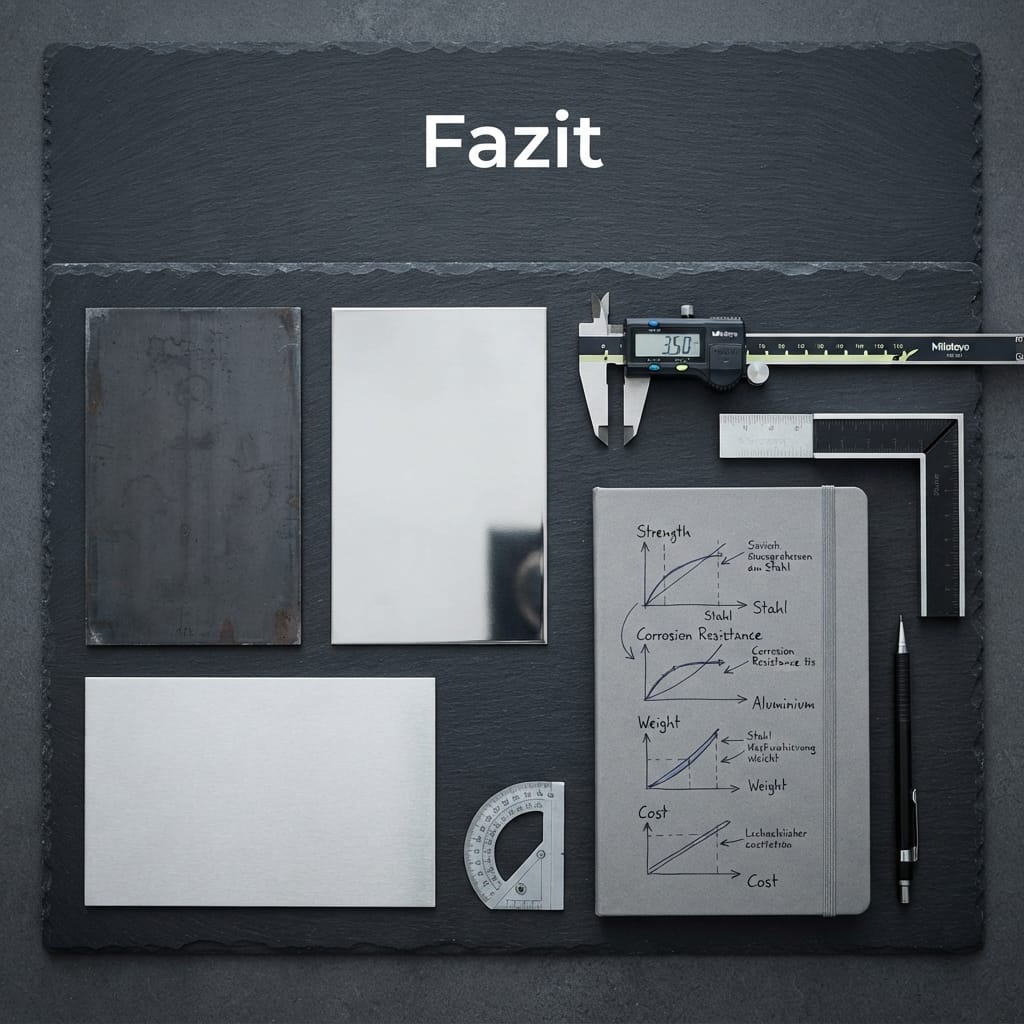
The choice between steel, stainless steel, and aluminum requires a precise consideration of mechanical properties, corrosion protection, and economic factors. While steel impresses with maximum strength and an attractive price-performance ratio, stainless steel offers advanced resistance to aggressive environmental influences. Aluminum, on the other hand, revolutionizes constructions with its extreme weight advantage and excellent thermal conductivity. Those who understand these material properties and combine them with modern manufacturing processes create the foundation for durable and safe industrial applications.
How does heat treatment affect the strength of steel sheets?
Heat treatment deliberately alters the microstructure of the steel, allowing manufacturers to adjust tensile strength, hardness, and toughness to specific requirements. Controlled heating and cooling can relieve internal stresses or set desired microstructural phases that directly influence behavior during forming and welding.
Why does stainless steel form a protective passive layer?
Stainless steel contains at least 10.5% chromium, which immediately reacts with the oxygen in the environment at the surface. This chemical reaction creates an extremely thin, yet dense and self-healing layer that protects the underlying metal from direct oxygen attack and thus from rapid oxidation.
In which industries is aluminum particularly frequently used as sheet metal?
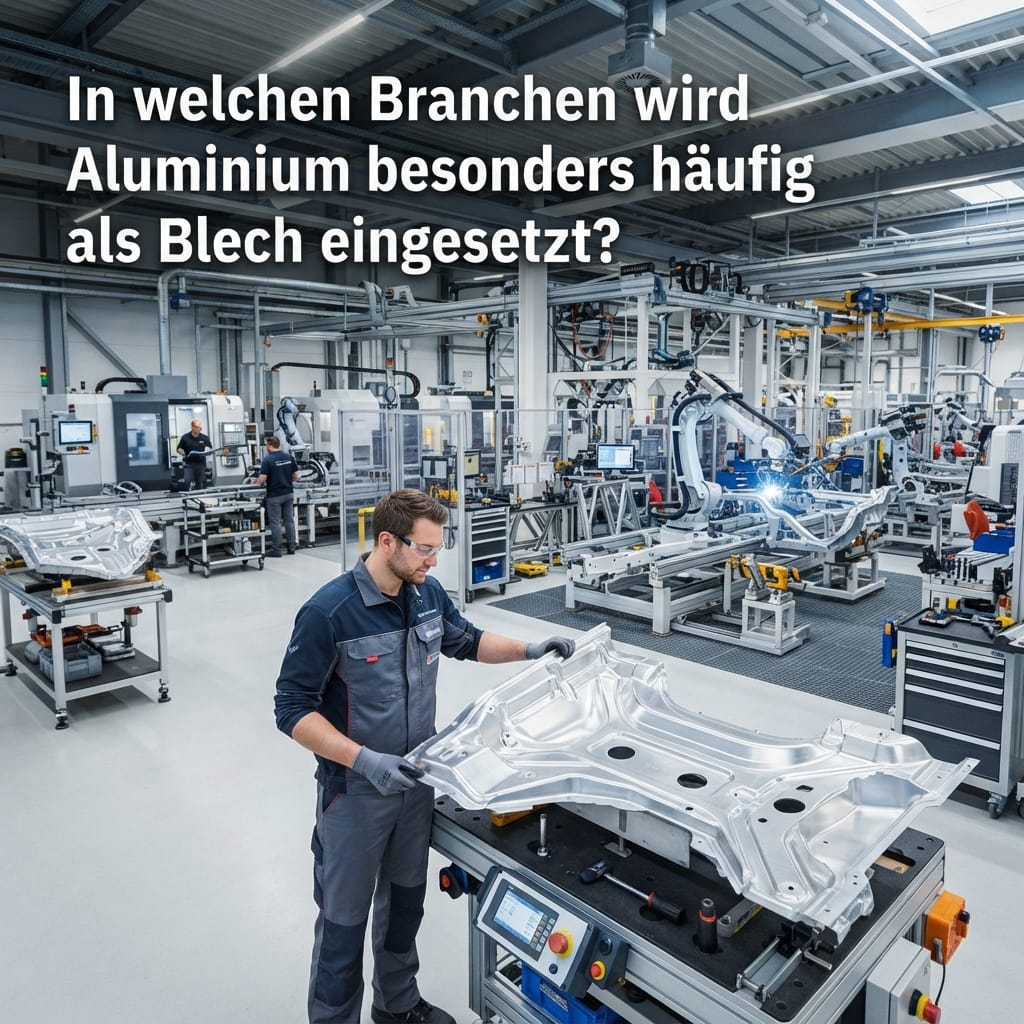
Aluminum sheets are primarily used in vehicle construction, aerospace, rail transport, as well as in mechanical engineering and facade technology. The main reason lies in the combination of low weight, good corrosion resistance, and high specific strength.
What role do corrosion factors play in material selection?
Environmental influences such as humidity, salinity, chemicals, or industrial exhaust gases significantly determine whether uncoated steel will corrode or whether higher-grade alloys are required. Chlorides are particularly critical, as they can lead to pitting or crevice corrosion in stainless steel, necessitating careful material testing.
How does the weight of aluminum affect energy consumption?
Due to the low density of aluminum, the counterweight of moving assemblies decreases drastically compared to steel. This leads to direct savings in energy consumption during transport and with rotating machine components throughout the entire service life of the product.
In the final planning phase, it is advisable to incorporate all the mentioned criteria from the very beginning into the design process. The experts at DIVIKOM BlechProfis assist industrial companies in selecting the optimal material and implementing it technologically in a fitting manner.
In the final planning phase, it is advisable to incorporate all the mentioned criteria from the very beginning into the design process. The experts at DIVIKOM BlechProfis assist industrial companies in selecting the optimal material and implementing it technologically in a fitting manner.


 German
 English