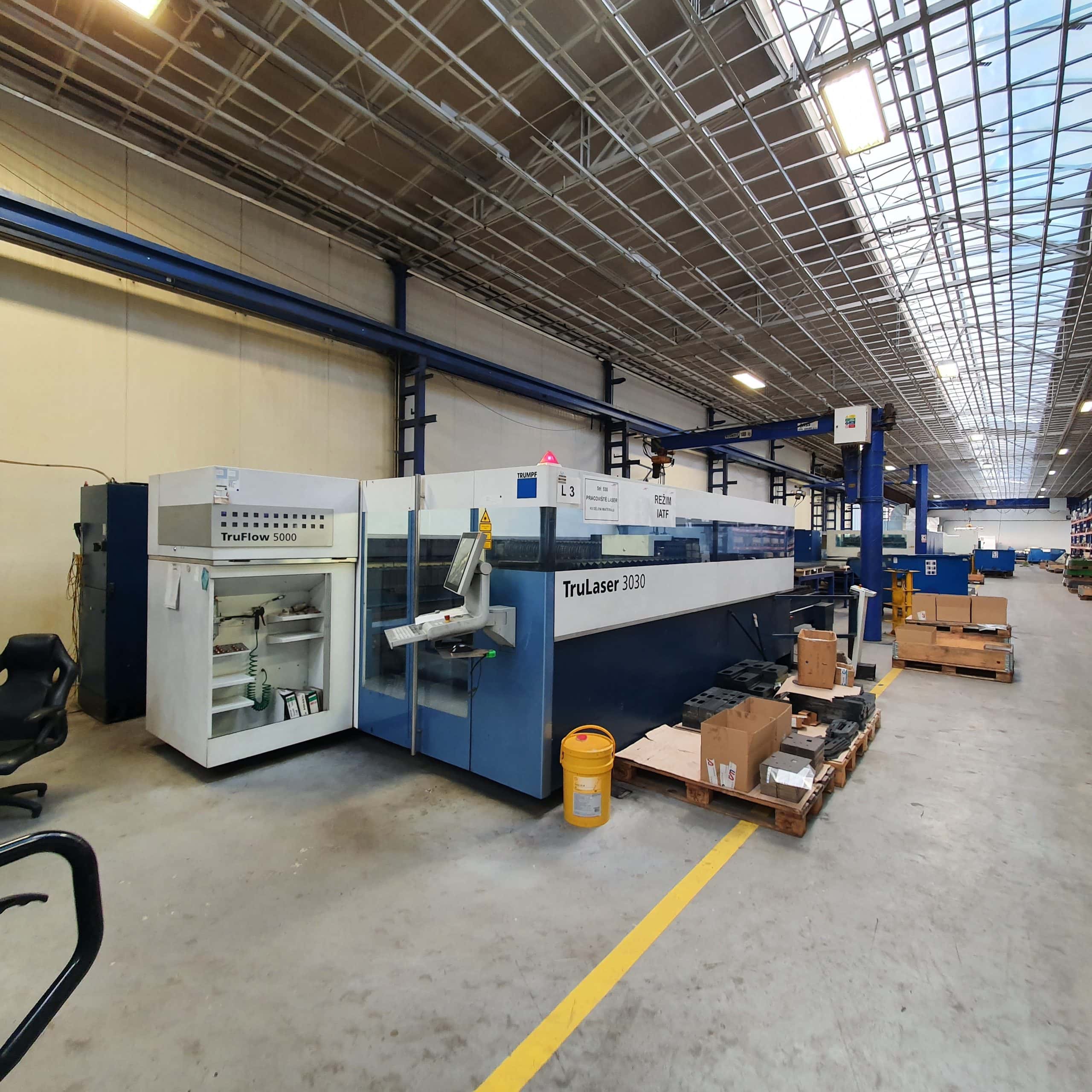
The Sheet metal laser cutting is a widely used process in metal forming. Numerous different shapes can be cut using this technique, with straight cuts being the most common. There are three types of laser cutting: internal hole cuts, part separating cuts and through cuts.
Inner hole cuts
With inner hole cuts, the metal is cut without removing any material on the outside of the part. The cutting speed can be adjusted to the desired laser power and metal thickness.
Part separation cuts
The Laser heats the metal quicklyso that it breaks apart and one part is separated from the other. With thinner materials, this enables a shearing effect.
Through cuts
Through cuts can be small diameter holes through which a wire can be fed, or larger holes that allow access to enclosed spaces. An example would be making a door in a steel enclosure to gain access to internal components. It can also be used to remove a damaged threaded insert from a larger panel without damaging the surrounding parts.
Advantages of laser cutting
The laser cutting process ensures a clean edge with a narrow cutting width, which means that less material is lost and no chipping occurs.
There are several reasons to opt for the Laser cutting of sheet metal parts to decide:
- The laser immediately delivers the power required for cutting without overheating the metal, making it suitable for materials that would be damaged by conventional tools.
- Cleaner cuts compared to plasma or flame processes, as no sparks or splashes are produced.
- A wide range of materials can be cut, including stainless steel and other alloys that require high temperatures.
- Very little smoke is produced, so visibility is not impaired during cutting.
- The kerf can be very narrow, depending on the power and speed of the laser and the thickness of the metal. More importantly, there is no heat-affected zone.
- The process can be fully automated, which requires little expertise to achieve a consistently high cutting quality.
Areas of application
Laser cutting systems are used in various industries, including aerospace, architecture, automotive, medical and consumer goods. Depending on the desired wavelength and power for your application, a CO2 or fibre laser can be used.


 German
 English