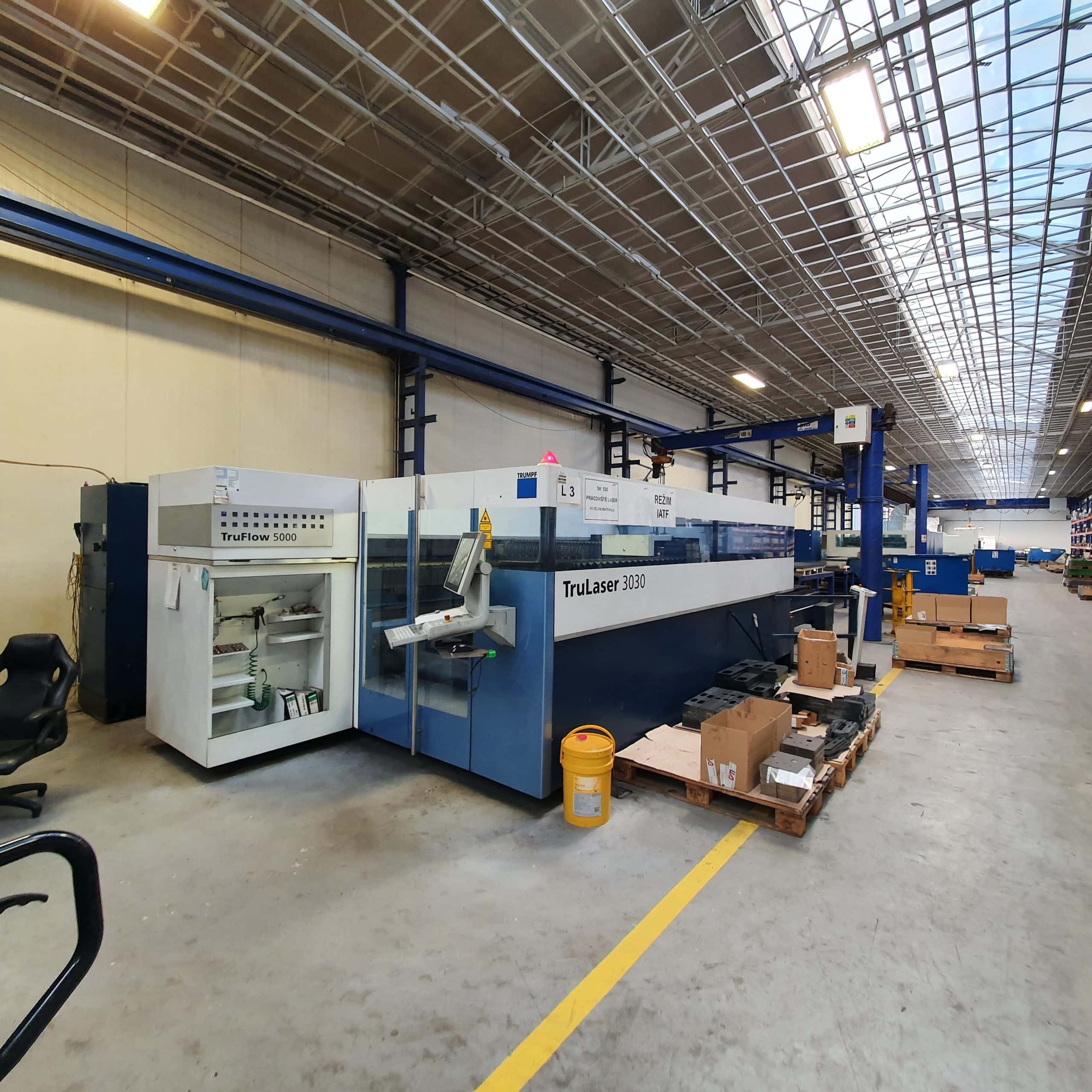
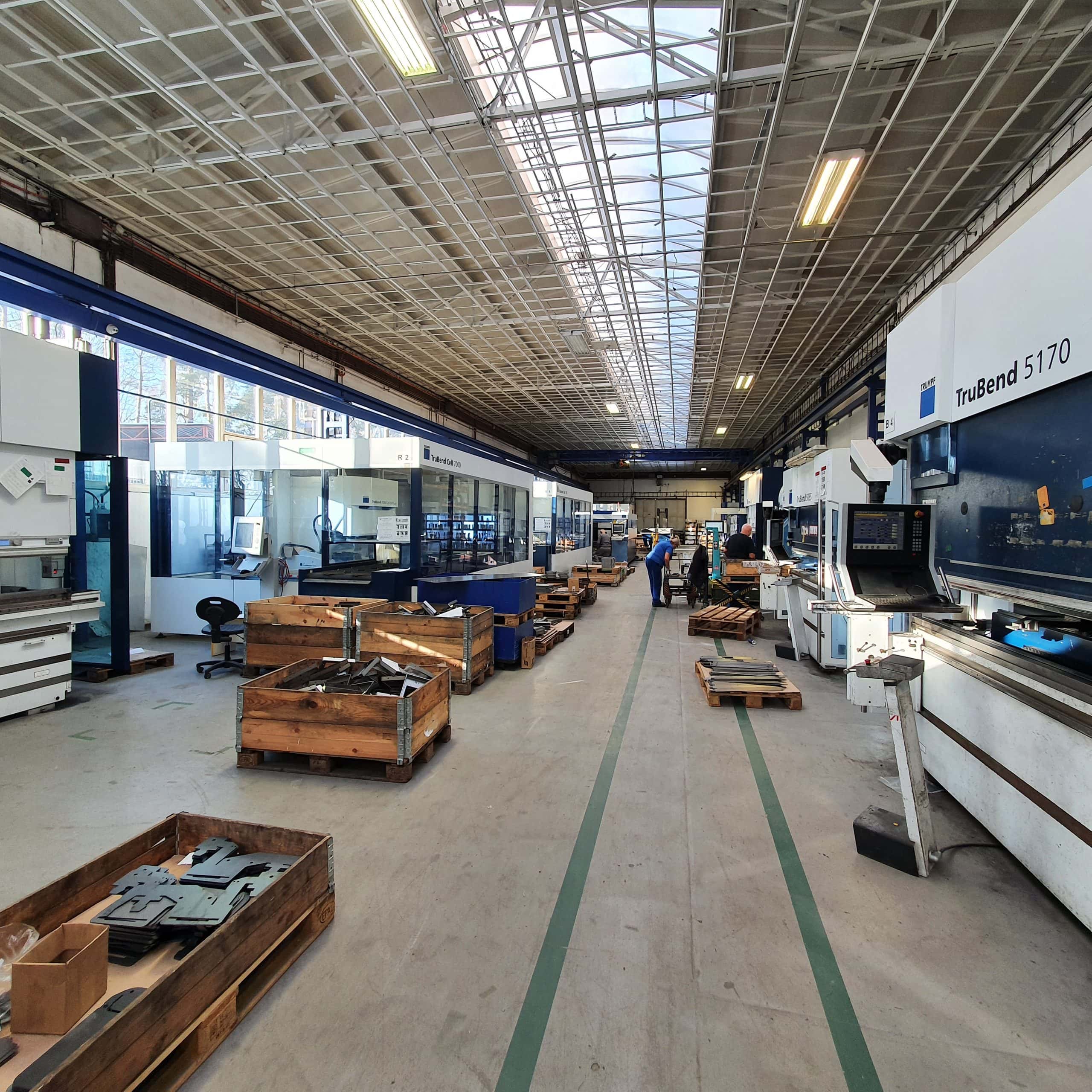
Our welding services
During welding, components are permanently joined together by a material bond. Which welding process can be used depends on the material, material thickness, design and the requirements for the joint.
Sheet metal welding
Custom sheet metal parts often need to be joined into housings, brackets or other components.
For production planning, material thickness, joint accessibility, component geometry and the requirements for the later application are among the important factors.
Welded assemblies to your drawings
A welded assembly consists of several individual parts that are assembled into a functional unit by weld joints.
Typical examples include:
- Brackets and consoles
- Housings and cladding
- Frames and stands
- Fastening and structural elements
- Machine and plant components
- Custom metal assemblies to customer drawings
Manufacturability and the required scope of processing are assessed for each project.
Contract welding services
Companies can outsource individual welding jobs or the manufacture of complete welded assemblies.
DIVIKOM BlechProfis supports commercial customers with technical coordination and the organisation of manufacturing with suitable production partners.
This is of particular interest for mechanical engineering, plant engineering, metalworking and manufacturers of technical equipment.
Which welding process is suitable?
Different materials, material thicknesses and joining requirements call for different welding processes.
MIG and MAG welding
MIG and MAG welding are shielding gas welding processes with a consumable wire electrode.
They are used in metalworking for numerous components and constructions. The specific suitability depends, among other things, on the material, the seam geometry and the requirements for the joint.
TIG welding
In TIG welding, a non-consumable tungsten electrode is used. The process is often used for components where targeted control of the welding process and seam execution is important.
Laser welding
In laser welding, heat energy is introduced locally by a focused laser beam.
The process can be of interest for suitable components when low heat input, narrow weld seams or automatable production workflows are the priority.
Further information can be found under Laser welding.
Spot welding
Spot welding is one of the resistance welding processes and, with suitable materials and component geometries, is particularly suitable for joining overlapping sheets.
You can find out more on our page Spot welding.
Which welding process is available and technically suitable for your order is clarified on the basis of your documents and the planned production.
Welding steel, stainless steel and aluminium
Steel welding
Steel is used for many welded constructions in machine and plant engineering.
When selecting the process, the exact material grade, material thickness, joint geometry and later loading must be taken into account, among other things.
Stainless steel welding
When welding stainless steel, requirements for corrosion resistance, seam design and surface condition can play an important role.
Depending on the application, suitable post-treatment of the weld seam may also be required.
Aluminium welding
Due to its material properties, aluminium places particular demands on the preparation and execution of welding work.
Feasibility depends on the alloy, material condition, wall thickness and design, and is checked on a project-specific basis.
Please specify the exact material designation for all materials wherever possible.
Welded assemblies: from individual parts to the finished structure
Many welded assemblies consist of several previously machined individual parts.
Depending on the design, manufacturing may comprise the following steps:
1. Technical review
Coordination of drawing, material, welds, bill of materials, tolerances and desired scope of delivery.
2. Cutting of the individual parts
Production of the required starting parts, for example by Laser cutting.
3. CNC press braking and preparation
Shaping and preparation of the components for later joining. More information is available on our page CNC bending.
4. Welding and joining
Joining the individual parts in accordance with the agreed design and technical specification.
5. Further processing
Depending on the order, deburring, mechanical reworking or a suitable Powder coating are to be taken into account.
Not every design requires all work steps. The exact scope is determined before production.
What matters when designing welded structures?
Weld specifications and access
Type of seam, seam position, joint geometry and accessibility are important foundations of production planning.
If certain weld seam requirements apply, these should be clearly stated in the drawing.
Welding distortion and dimensional accuracy
The heat introduced during welding can cause components to distort. The design, the welding sequence and, where appropriate, suitable fixtures can influence the result.
For function-critical dimensions, the required tolerances of the finished component should be specified.
Surface finish and further processing
Depending on the intended use, there may be additional requirements for weld seams, visible surfaces, coatings or preparation for further processing.
Inspection and documentation
If certain tests, material certificates or welding-related certifications are required for your project, please state these in your enquiry from the outset.
We check whether the desired scope of services can be offered with the required documentation.
What affects welding costs?
The costs are based on the technical requirements for the component and the joint.
Important factors are:
- Material and material thickness
- Number, length and accessibility of the weld seams
- Seam geometry and welding process
- Size and complexity of the design
- Fixture and set-up effort
- Quantity and repeat demand
- Tolerances and inspection requirements
- Required reworking and surface treatment
For complete welded assemblies, the manufacture of the individual parts and the further processing steps must also be taken into account.
For an individual quotation, we therefore need technical documents that are as complete as possible.
Request a welding quote: documents required
Please provide the following information as far as possible:
- Technical drawing of the component or assembly
- Where applicable, individual part drawings and bill of materials
- Material and material thickness
- Dimensions and number of individual parts
- Quantity per assembly
- Weld seam details and special requirements
- Critical dimensions and tolerances after welding
- Required inspections or evidence
- Required surface finish
- Delivery date and delivery location
A dimensioned PDF drawing is suitable for the initial technical review. Existing CAD data can supplement the coordination.
If not all details are available, please first describe your project and specify the requirements already defined.
Request a welding quote


 German
 English