
Laser Drilling: Efficiency and Accuracy in Industrial Sheet Metal Fabrication
Modern industries demand precise manufacturing methods for processing thin sheets and high-strength materials. A thermal, non-cutting process such as laser drilling has established itself as a technology for producing the smallest openings with high repeatability. In this process, material is locally heated to a very high temperature by the concentrated energy of a laser beam, melted and partially vapourised. The choice of the right process has a decisive influence on the productivity and quality of the finished component. In industrial practice, precise control of the process parameters ensures that even demanding metals can be processed without mechanical stress. Companies benefit from clean cut edges and minimal heat-affected zones, which is of particular importance in aerospace and medical technology.
Fundamentals and Physical Principle of Laser Drilling
The physical principle of thermal material removal differs fundamentally from conventional mechanical drilling processes. While conventional tools work through friction and chip removal, laser technology uses concentrated photon energy. According to Wikipedia on the topic of laser drilling the beam intensity is set so high that the target material changes state within microseconds.
Practical manufacturing experience shows that the geometry of the resulting hole depends heavily on parameters such as laser energy, focal position, workpiece thickness and ambient pressure. Since the material is removed mainly by melting and vapourisation, the process's overall energy efficiency is, for physical reasons, lower than with purely mechanical methods. Nevertheless, the advantages in terms of flexibility and tool wear outweigh this.
A central aspect in designing production lines is the avoidance of process instability. Insufficient laser power or unsuitable pulse durations can cause molten material to remain in the channel and partially close the drilled hole again. To prevent this, engineers rely on optimised gas flow paths and precisely matched pulse sequences. In addition to conventional drilling, companies often use supplementary technologies such as laser drilling to meet specific requirements for hole geometry.

Technological Variants and Modern Process Parameters
Various variants of the process are used in industrial manufacturing, including percussion drilling, trepanning and helical drilling. Each variant offers specific advantages for different material thicknesses and diameter requirements.
Studies on process optimisation show that smaller focal diameters enable significant gains in efficiency. When processing stainless steel foils, a focal diameter of 15 micrometres resulted in higher volumetric efficiency than a diameter of 22 micrometres, as shorter processing times reduce undesirable heat conduction losses in the surrounding structure. Further insights into the physical relationships of thermal separation processes are provided by a study on thermal material removal processes at Springer.
The productivity of modern beam sources reaches impressive levels. In scientific trials, up to 6,250 through-holes per second were achieved in thin stainless steel foils, with the standard deviation of the diameters in the submicroscopic range. For thicker sheets, such as 2 millimetre aluminium, research institutions like Fraunhofer ILT report stable results with several holes per second at hole diameters in the millimetre range. Such figures underline that the technology has long since moved beyond simple laboratory applications and has secured its place within comprehensive surface treatment and metalworking.
Integration into the Sheet Metal Fabrication Process Chain
The creation of holes is rarely an isolated step in industrial production; rather, it is closely linked with other sheet metal fabrication processes. Before components reach their final form, they often pass through automated lines that include not only the Laser cutting but also bending, punching and precise CNC milling.
The combination of different processing methods plays a decisive role in economic efficiency. For example, when complex geometries are required on tubes or profiles, the Tube lasering can be combined seamlessly with drilling processes. This reduces the number of set-up operations and minimises tolerance chains that could arise during manual intermediate steps.
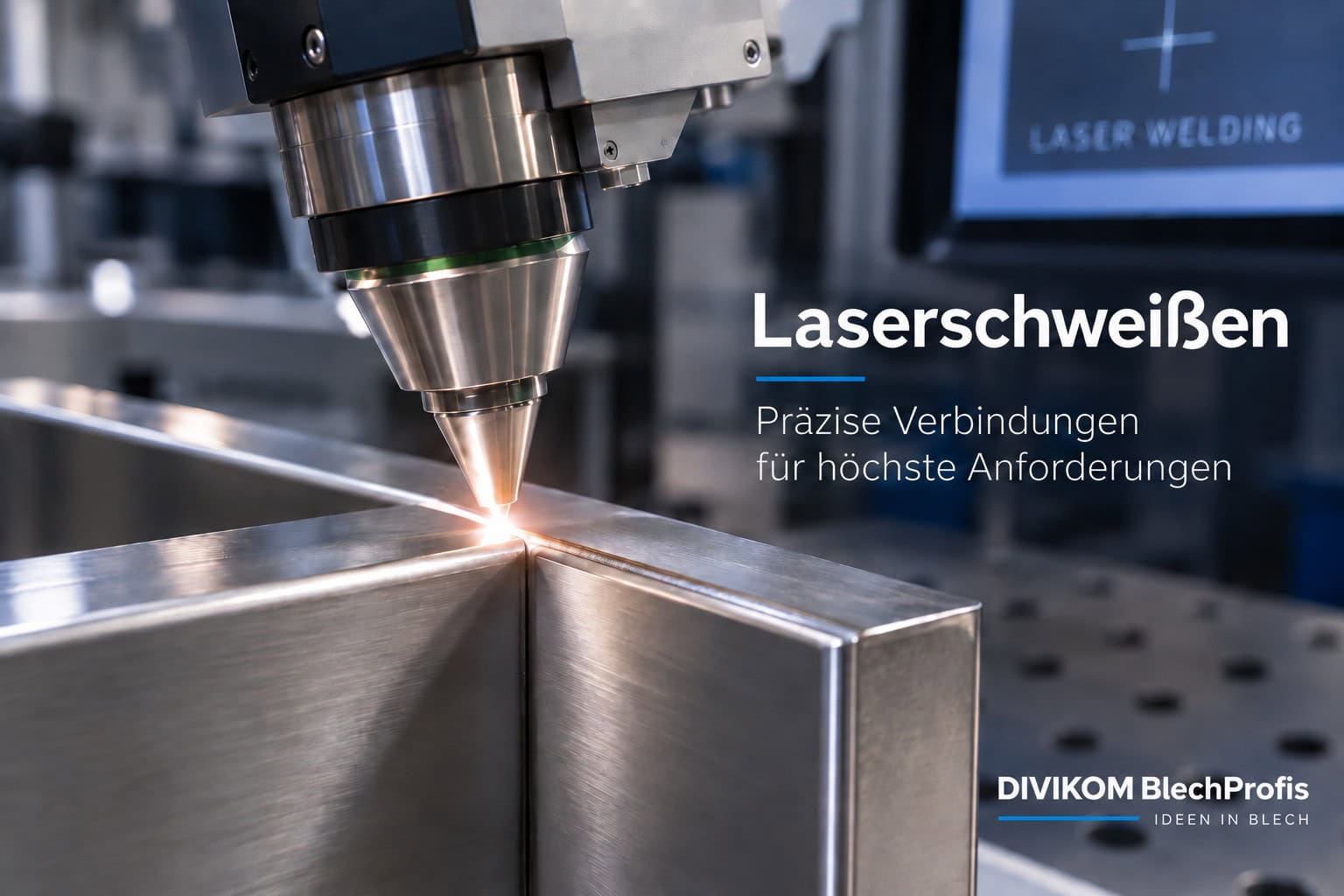
Post-processing of the workpieces also requires specialist knowledge. After thermal drilling, oxides or scorch marks often have to be removed in order to ensure the surface quality for subsequent coatings or welding processes to be prepared. The subsequent laser welding, for example, benefits from absolutely clean hole and cut edges, as inclusions in the weld metal are avoided. Companies that rely on a high level of in-house manufacturing depth align all parameters precisely from the first CAD drawing to final quality control.
Influence of beam shaping and ultrashort-pulse lasers
The further development of laser sources has significantly shifted the boundaries of what is possible in recent years. In particular, the use of ultrashort-pulse lasers (USP) in the pico- and femtosecond range has drastically reduced the thermal load on the material. As the interaction time is so short that the metal changes directly from the solid to the gaseous state, this is often referred to as almost „cold“ ablation.
In addition, targeted beam shaping is becoming increasingly important. Physical studies show that the use of non-diffractive Bessel beams can achieve significantly improved efficiency in deep-hole drilling of steel sheets compared with classic Gaussian beams. The energy distribution relative to depth remains constant over a greater distance, resulting in more cylindrical hole channels. A broader technical overview of this topic is provided by ScienceDirect with specialist articles on laser material processing is also available.
In everyday industrial practice, this means for planners that investment in modern beam source technologies increases flexibility when processing a wide range of metals. Whether titanium alloys for medical technology or high-strength stainless steel for pressure vessel construction: precise control of pulse frequency and beam profile prevents cracking in the heat-affected zone.
Quality control and quality assurance
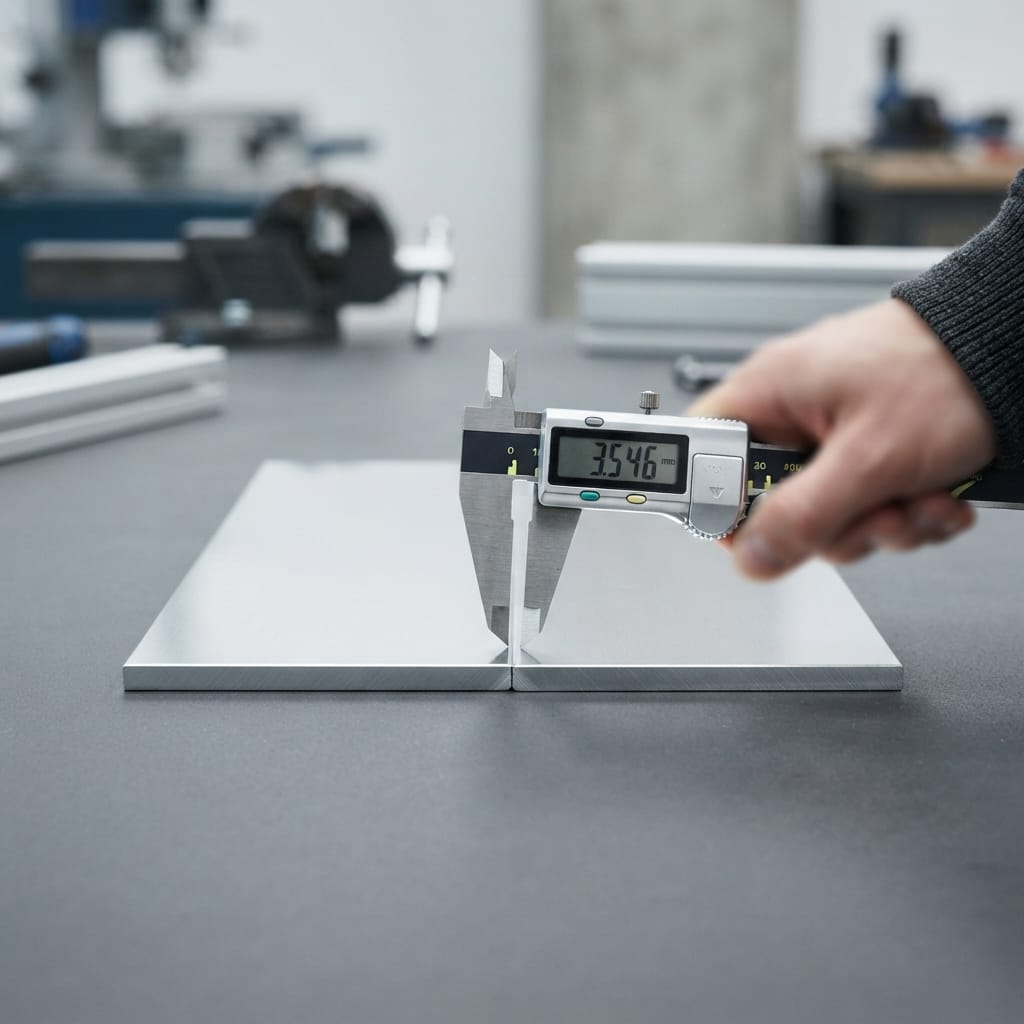
Compliance with tight tolerances is the most important criterion in the industrial production of precision components. Since hole diameters in the micro or small-batch range are often subject to strict specifications, seamless quality assurance is essential. Optical measuring methods and non-contact sensor systems check the geometry immediately after the machining process.
In practice, it is clear that geometric deviations at the hole outlet are often smaller than at the inlet, provided the gas flow is optimally set. Nevertheless, process monitoring requires highly developed algorithms in order to detect even the smallest fluctuations in the material batch or laser power at an early stage. A sound scientific classification of the process parameters is also provided by the Fraunhofer Institute for Material and Beam Technology with specialist publications.
DIVIKOM BlechProfis support industrial customers in implementing these complex requirements reliably in production. Through the close integration of theoretical know-how and practical machine utilisation, tailored solutions are created for a wide range of industries.
Economic aspects and future prospects
The cost-effectiveness of laser drilling is measured not only by the direct machine hourly rates, but by the overall balance of the process chain. Although the acquisition of high-performance laser systems requires substantial investment, the high processing speed, the elimination of tool wear and the enormous flexibility quickly offset these costs.
As no mechanical drills can break or need regular regrinding, setup and downtime in production are noticeably reduced. In addition, non-contact machining makes it possible to produce delicate geometries that would be economically almost impossible to manufacture with conventional tools.
Future developments will focus heavily on automation through artificial intelligence and adaptive control systems. Machines that recognise in real time, based on sensor data, when material properties change will further reduce the reject rate. This will ensure that the process remains a key driver of efficiency and technological progress in the metalworking industry.

Frequently asked questions about laser drilling
What is meant by laser drilling?
This is a thermal, non-cutting process in which material is locally melted and partially vaporised by a concentrated laser beam to create precise holes.
Which metals are suitable for this process?
The process is suitable for a wide range of metals, including stainless steel, aluminium, titanium and various high-strength alloys used in industry.
What is the advantage compared with mechanical drilling?
As there is no physical tool contact, there is no tool wear. In addition, extremely small diameters and complex geometries can be achieved without mechanical stress on the workpiece.
What role do ultrashort pulse lasers play?
Ultrashort pulsed lasers in the pico- or femtosecond range drastically minimise the thermal heat-affected zone, resulting in clean holes without significant burr formation or microstructural changes.
How is the quality of the drill holes ensured?
Thanks to modern optical measuring systems and precise monitoring of process parameters such as pulse frequency, focus position and gas pressure, the required tolerances can be consistently maintained.
Which industries use this technology particularly frequently?
Main users are the aerospace industry, the automotive industry, medical technology, and general mechanical and apparatus engineering for processing sheet metal and tubes.
Through the continuous further development of beam sources and control software, the process will in future be able to be adapted even more precisely to individual customer requirements. Industrial customers who rely on the highest quality and efficient processes will find modern manufacturing concepts a reliable way to successfully meet future challenges in metalworking too.
Through the continuous further development of beam sources and control software, the process will in future be able to be adapted even more precisely to individual customer requirements. Industrial customers who rely on the highest quality and efficient processes will find modern manufacturing concepts a reliable way to successfully meet future challenges in metalworking too.
To sustainably secure these high quality standards in daily practice, experienced manufacturing companies rely on comprehensive documentation and state-of-the-art plant technology.
 German
 English