
Modern sheet metal fabrication demands high precision standards, economical processes and the lowest possible material loss. Laser cutting plays an important role among thermal separation processes. A focused laser beam enables narrow kerf widths, complex contours and high dimensional accuracy. Compared with conventional machining and separation processes, direct tool contact is also eliminated, along with the associated cutting forces and wear problems. A scientific overview of the influencing factors and advantages of laser cutting is available at Springer Nature General standards do not cover every application case. Different requirements apply for thermal cutting compared to machining or forming processes. Material, material thickness, machine condition, and process management influence the outcome. In practice, normative specifications and the actual capabilities of the manufacturing operation must therefore be considered together.
Basics of thermal beam processes in direct comparison
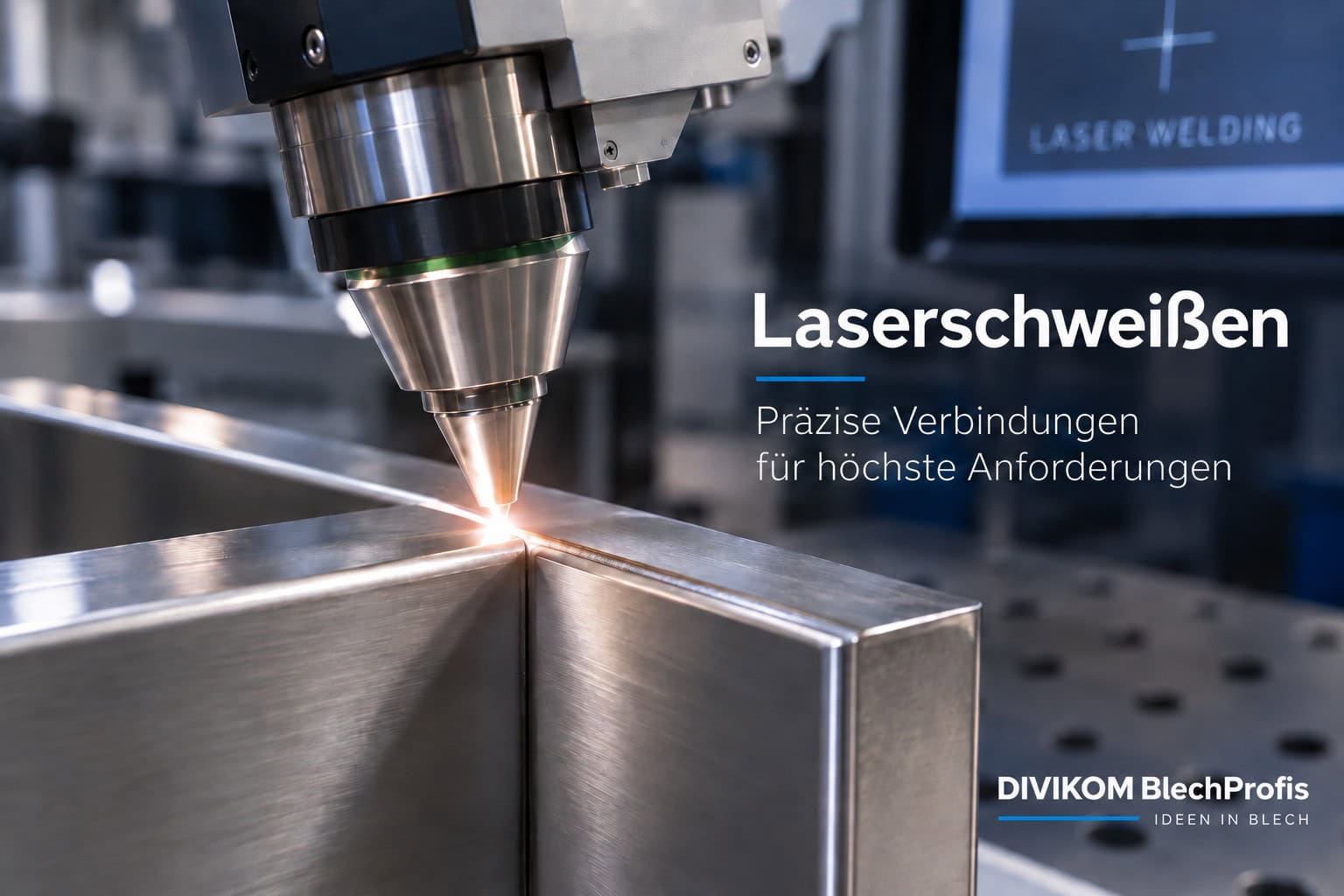
In thermal laser cutting, a focused beam of light is directed at the workpiece. The concentrated energy melts or vaporises the material locally, while a gas stream removes the resulting molten material from the kerf. In direct comparison with conventional methods such as Punching or mechanical cutting, the system operates without contact. As a result, hardly any mechanical forces act on the workpiece, and tool-contact wear does not occur. These properties can be particularly advantageous for materials that are difficult to machine, as typical problems such as high cutting forces, tool wear and limited tool life are avoided.
CNC control also enables the processing of different contours without form-specific tools. For new components, punches, dies or other special cutting tools therefore do not necessarily have to be manufactured. This makes individual parts, variants and short-notice design changes easier. However, the specific suitability always depends on the material, the material thickness and the selected process parameters.
Precision and dimensional accuracy with complex contours
A key advantage of laser technology lies in the narrow kerf and the resulting high dimensional accuracy. The focused beam can process complex contours, small cut-outs and delicate geometries. Compared with processes using wider tools, the cut can be guided precisely without a mechanical cutting tool acting on the workpiece.
Cut quality is assessed, among other things, on the basis of surface roughness, kerf width, squareness, burr formation and heat-affected zone. With suitable parameters, the quality can be such that the amount of rework required is reduced. An overview of the assessment of cut quality in laser cutting can be found in the specialist literature by MDPI.
However, the statement that a cut is generally „better“ should always be qualified. Manufacturers and scientific studies sometimes use different criteria for evaluation. Material, thickness, laser parameters and the respective comparison process have a significant influence on the result.
Material efficiency and reduction of waste
Raw material costs form an important cost factor in many areas of metalworking. Here, laser cutting can contribute to better material utilisation thanks to its narrow kerf width. Components can be nested closely on a sheet metal blank, so that the distance between contours can be kept small. This can reduce waste compared with processes using wider tools.
However, actual material efficiency does not depend on the laser alone. The geometry of the components, the layout on the sheet, the material thickness and the cutting strategy also play a role. Suitable planning of the cutting sequence and component positions therefore supports the most economical use possible of the starting material.
The advantage of the narrow kerf is particularly relevant when many different contours need to be cut from a sheet metal blank. In such cases, the digital preparation of the cutting programme can make it easier to utilise the material efficiently. The narrower kerf width is also highlighted in the overview of the advantages of laser cutting at Springer Nature .
Flexibility and setup times in low-volume and high-volume production
The digital control of modern cutting systems enables a rapid change between different jobs and geometries. Changes are implemented in the CNC programme or in the associated design data. In contrast to form-based processes, a new mechanical tool is therefore not required for every contour.
This flexibility makes it easier to manufacture individual parts, variants and prototypes. Quick design changes can also generally be implemented more easily, provided that the system and process parameters are suitable for the respective material. The same technological basis can be used for different contours.
The process is also suitable for various material groups. In the literature, metals, plastics, glass, wood, ceramics and composite materials are cited, among others, as machinable materials. However, machinability depends on the properties of the material, the laser source, the power and the process conditions. An overview of laser and conventional machining processes is provided by ScienceDirect.

Cutting speed and process quality
Laser cutting is regarded as a fast separating process, especially for thin sheets. However, the achievable speed is not fixed in general. It depends, among other things, on the material, material thickness, laser power, cutting gas and further process parameters .
High speed alone is not a sufficient quality criterion. What matters is the interaction of feed rate, energy input, gas flow and focal position. If the parameters are selected appropriately, a narrow kerf and a suitable cut quality can be achieved. At the same time, the heat-affected zone must be controlled so that thermal changes at the cut edge do not become unnecessarily large.
The concentrated application of energy can limit the thermal effects compared with processes that introduce more heat. However, a small heat-affected zone is not automatically guaranteed. Its size depends, among other things, on power, speed, material and gas. These relationships are described in a recent literature review on laser-assisted cutting processes at ScienceDirect .
Limits and challenges in everyday industrial use
Despite the numerous advantages, laser cutting is not fundamentally superior to every other process. Highly reflective materials can partially throw back the irradiated energy and thereby make processing more difficult. Material thickness also influences the suitability of the process. For greater thicknesses, higher energy input and adapted process conditions may be required.
Other possible influencing factors are oxidation, burr formation and the heat-affected zone. The cut quality can change if power, speed, focal position or gas are not suitably matched to the material and thickness. That is why suitable parameter studies and material-specific process planning are important.
For heat-sensitive materials too, it must be checked whether the thermal load is acceptable. For certain applications, other separating processes may be more suitable or more economical. A factual assessment should therefore always take into account the specific material thickness, the required contour, the permissible edge quality and the comparison process.
Economic trade-off between in-house investment and service provision
For many companies, the question arises whether purchasing their own laser system or outsourcing to a specialised service provider is the better option. Such a decision depends, among other things, on the order volume, the required material variety, the flexibility needed and regular capacity utilisation.
An in-house system can enable direct control over production when demand is continuous. At the same time, investment, operation, maintenance and process optimisation must be taken into account. With low or fluctuating demand, external production can be an alternative, as no in-house system has to be kept available.
Regardless of where the machine is located, selecting suitable process parameters remains important. High precision or a small kerf is not achieved simply by using a laser. Rather, material, material thickness, power, speed, focus and cutting gas must be matched to one another. The desired cut quality should also be clearly defined in advance.
Future prospects for thermal separation technology
The further development of laser sources, control systems and process parameters can continue to influence the applications of laser cutting. In particular, the combination of CNC control, digital production planning and precise optics supports the flexible processing of different contours.
Scientific studies continue to address cutting speed, cut quality, heat-affected zone, material selection and the machining of hard-to-machine materials. It is clear that the advantages of the process must always be assessed in the context of the respective boundary conditions. Research into the influencing factors and advantages of laser cutting is summarised, among other places, at Springer Nature summarised.
The process therefore offers a combination of high flexibility, a narrow kerf, contact-free processing and versatile contour design. However, it remains an application-dependent technology, the result of which is determined by the material, thickness and parameter settings.
What are the main advantages of laser cutting compared with mechanical punching?
The process works without contact. As a result, there are hardly any mechanical forces on the workpiece, and tool contact wear does not occur. In addition, no shape-specific tools such as punches and dies are required for each individual contour. This makes design changes and the production of different variants easier.
Why is material loss lower in laser cutting?
The laser creates a narrow kerf. As a result, components can be placed more closely on a sheet metal panel when arranged appropriately. Compared with processes that use wider tools, this can reduce scrap. The extent of the actual benefit depends on geometry, material thickness and cutting planning.
Which materials can be processed with the laser beam?
The literature mentions metals, plastics, glass, wood, ceramics and composite materials among the materials that can be processed. Whether a particular material can be cut economically and with sufficient quality depends on its properties as well as the laser source, power and process parameters.
When do laser systems reach their technical limits?
Reflective materials, greater material thicknesses, heat sensitivity, oxidation, burr formation and an undesirable heat-affected zone can limit suitability. For this reason, material, thickness and process parameters must be considered together. In certain cases, alternative separation processes may be more suitable.
Is mechanical post-processing always required after laser cutting?
No. With suitable parameters, the cut quality can be such that post-processing is reduced. Whether deburring or another processing step is required depends, however, on surface roughness, squareness, burr formation, heat-affected zone and the requirements of the component.
Is it worth investing in an in-house system for small companies?
That depends heavily on capacity utilisation and the specific requirements. With regular demand, an in-house system can make sense. With low or fluctuating order volumes, outsourcing to a specialised service provider may be more economical, as investment, maintenance and ongoing system costs do not have to be borne internally.
Continuous further development makes laser cutting an important part of modern manufacturing. Its strengths lie in the narrow kerf, high contour flexibility, contact-free processing and the possible reduction of material loss and rework. For demanding projects, however, it is still advisable to analyse the properties of the material, the material thickness, the required cut quality and the available alternative processes carefully.
 German
 English