
With the further development of laser cutting technology for metal, the laser cutting machines themselves have become easier to operate and require less maintenance. In addition, the range of materials that can be cut with lasers has expanded, making them a more versatile tool for companies.
Today's metal laser cutting machines are also much safer to use than their predecessors, so they can be easily operated by people with no previous experience. And finally, these machines have become more flexible when it comes to what they can produce, so companies now have more freedom in product design.
If you are looking for a powerful and versatile tool for metalworking in your company, then a metal laser cutting machine is the perfect choice.

Do you know your lasers: CO2 vs fibre?
Some may say that you need a fibre laser to cut metal, but that's not quite true.
Yes, fibre lasers cut metal faster, the beam is smaller so it is more precise, and it consumes less power. Fibre lasers are also easier to handle and cheaper to maintain in the long run. However, fibre lasers are usually twice as expensive as CO2 lasers and they cannot cut as many different materials.
Let's take a closer look at the differences.
A CO₂ laser is generated by sending an electric current through a glass tube filled with CO₂ and other gases. There are two mirrors at the end of this airtight glass tube. The current flowing through the tube excites the gases and causes them to produce light. The light bounces off some cleverly placed mirrors in the laser cutter before being focussed through a lens and leaving the device to hit the surface of the material you are working on.
CO2 lasers may be cheaper, but they always require oxygen or nitrogen as an auxiliary gas and are limited to cutting less reflective metals. CO₂ lasers are also fragile devices. With their combination of mirrors and glass tubes, they are quite fragile and need to be perfectly aligned to work optimally. This leads to expensive maintenance and servicing costs, both in terms of time and money. However, this is offset by their affordability.
Fibre lasers are a newer technology in the world of laser cutting. In industry, they are often used to cut thin metal sheets for production components. As desktop devices, they are still expensive, but they have a number of advantages such as electrical efficiency and fewer moving parts.
In a fibre laser, the laser itself is generated from an optical fibre to which rare earths (such as erbium, ytterbium or neodymium) have been added. Fibre lasers cut without a supporting gas. The lasers produced using this method are very stable and easy to focus.
There are other types of laser cutters, but for the purposes of this buying guide, we will focus on the two most common ones - CO₂ and fibre.
Metallic materials for cutting with laser cutting system
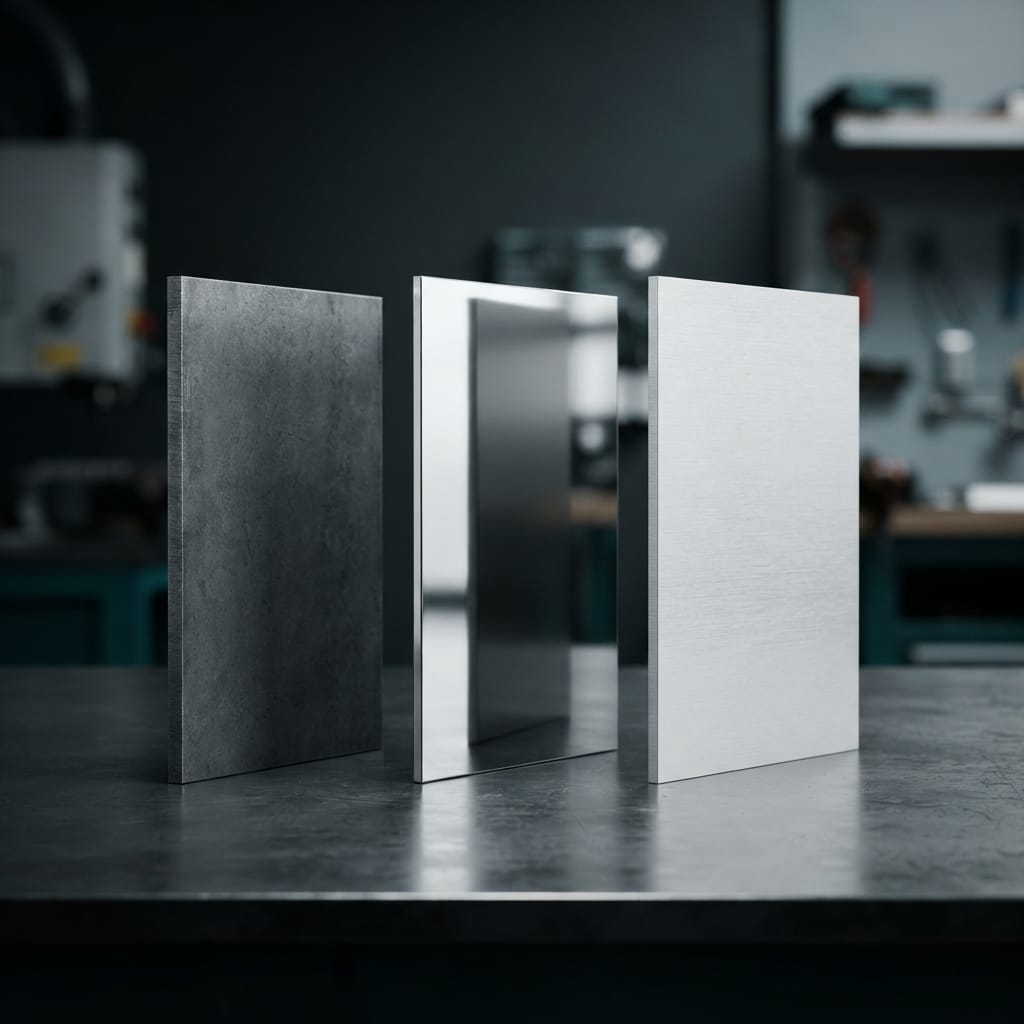
Cutting materials such as cardboard, acrylic and wood is no problem with entry-level CO2 cutters. This is because these materials burn easily and absorb light. Metal, on the other hand, is reflective and thermally conductive. This means that a laser has to irradiate a smaller area with more intense light in order to cut through it.Different metals have different properties that affect how they can be cut. Powerful CO2 lasers can cut metals such as steel and stainless steel, but have difficulty with aluminium and brass due to their reflective properties. Fibre lasers are often used to cut copper and aluminium.Parts of a laser cutter for metal
To make the best purchase decision for a metal laser cutter and get the most out of your machine, you should know how they work and how you should work with them.
The basic parts of laser metal cutting machines:
- Frame or full housing
- Laser power supply (built-in or independent)
- Laser generator
- Reflector track
- Laser cutting head
- Water cooling (if water-cooled)
- Control panel
- CNC system
To get the best results, there are a few simple things that can make the laser cutting process easier or faster. If you are using a CO2 or fibre laser cutter, learning about how it works with different materials is crucial to a successful project. Once the right material has been selected with the the right laser cutter and the right laser power is combined, you can get started with these simple tips:
Increase the material. When cutting materials with a laser, it is best if as little surface as possible touches the work platform. It is advisable to use a platform raised on spikes or a honeycomb-shaped work surface. A raised platform means that less heat is dissipated through the machine and less molten material falls onto the platform.
Carry out tests. If you carry out a test run with your software, you can save yourself a lot of trouble later on. If you run the laser cutter through the programme without the laser running, you can detect possible errors and save time and material. If you do a small test run with the laser running on waste material, you will get to know the focal point and learn how much power and speed is required to cut new materials.
Disconnect the gas from the laser. If you are using a CO2 laser cutter with oxygen gas support, keep the tank as far away from the machine as possible for safety reasons. Do the same with fibre lasers that can use oxygen or nitrogen. It is often safest to keep the gas tanks in a separate, fireproof container.
Make good cuts. When designing, make sure that all parts to be cut are completely cut out of the source material. This helps with post-processing and ensures that there are no cut or crease marks when you try to cut out a part.
Both CO2 and fibre laser machines cost over EUR 10,000, so cutting metal with lasers is often limited to professional and industrial use. If you are looking for something more affordable, consider waterjet cutting, plasma cutting, punching or even building a own laser cutter to consider. If all else fails, there are several service providers who can do the cutting for you, some of which we list at the end of this article.
A metal laser cutting machine is purchased from a dealer or manufacturer.
Cutting and post-processing
If you have the right device and take the necessary precautions, cutting metal is no different to cutting wood or MDF. The laser cutter emits a beam that melts or vaporises the material. It is assisted by a gas that either helps to heat the material and blow away debris, or simply expels the debris.
The important difference is that metal is reflective and some lasers, including most CO2 lasers, cannot cope with the laser beam being reflected back into the laser emitter. This is why CO2 lasers in the 150 to 300 watt range work primarily with different types of steel that are not too reflective. Fibre lasers work on a different principle, which enables them to be many times more powerful than CO2 lasers without the disadvantages.
As with other lasers and materials, testing the right focus point, power and speed is the way to successfully laser cut metal. One guideline to keep in mind is that you should only cut low reflective metals such as steel with a CO2 laser. Fibre lasers can cut most metals, but it is important to find the right pulse and power for the different materials.
After cutting the metal, there are a few finishing techniques you can use to give the material a clean finish. The cut edges can be sharp, so it's often a good idea to deburr or sand the edges with a deburring tool. Depending on the metal you are working with, you can also give the piece a finish. This includes polishing, etching, painting, hydro-dipping and more, which can add character to your project.
Check your machine at the end of each project to ensure that all mirrors, lenses, pump systems, modules and axis components are in good condition. Neglect will eventually lead to failure. So if you maintain a well-adjusted machine, it will stay ready for the next project.
Software for laser cutting
Laser cutting software comes in two different flavours - design and control. Design software is the tool you use to design what you actually want to cut with the laser. The control software manages the machine and the commands it needs to carry out the job.
For some machines, the software is provided for you.
With some devices, you will need to procure (and pay for) your own laser software. While you have the option of using free software, such as the popular LaserGRBL control software, many users find that paying for quality software is critical to getting good results from your laser cutter. You should factor this cost into your purchasing budget.
Metal laser cutting services
Laser cutting machines that can cut metal are expensive, and not everyone has the time or resources to work with such a machine. Fortunately, there are other ways to have metal cut that are very affordable. There are many services that will do this for you. Often, all you have to do is upload your CAD files to the platform to get an instant price, submit a design, pay for materials and shipping, and wait!
Another option to consider are companies in your neighbourhood. They are often cheaper than the big international service providers, but are likely to focus on one handling process rather than several different ones.
Regardless of whether you want to invest in your own machine or utilise a machining service, hopefully you now have a better understanding of the possibilities!

 German
 English
5 responses
I really like the fact that today's metal laser cutting machines are much safer to use than their predecessors. My husband is currently looking for a company that can custom cut different types of metal for him. So thank you for this informative post on laser cutting machines.
It is indeed gratifying that modern metal laser cutting machines have made great strides in terms of safety and ease of use. It might be helpful for your husband to get in touch with companies that specialise in custom metal cutting. Such service providers can usually process a wide range of metal types and offer customised solutions. I hope this article has provided you with useful information for your search.
Thank you for this article on laser cutting. It's good to know that clean cutting is particularly important. I would also like to have some 2D laser cutting done.
I am pleased that you found the article on laser cutting helpful. The precision and cleanliness of the cut are indeed crucial factors for a successful application of 2D laser cutting. If you are interested in utilising this process for your projects, it would be advisable to contact a specialist company who can discuss your specific requirements and details. Good luck with your project!
Thank you for your contribution. We are looking for laser technicians. It's interesting how much you can do with different materials. lasertechnik-metallglas.at